OTR vs. Regional vs. Local: Which CDL Schedule Actually Fits Your Life?
The real trade-offs between over-the-road, regional, and local CDL driving — beyond what recruiters tell you.
The Question Recruiters Don't Always Answer Honestly
Every CDL driver eventually asks the same question: OTR, regional, or local? The standard recruiter answer is 'it depends on what you're looking for.' That's technically true — but it's also incomplete.
What it really depends on is where you are in life, what your household needs from your income, how much your family (or you) can tolerate absence, and how you handle extended solitude. This guide breaks down the honest trade-offs.
Over-the-Road (OTR): The Highest Pay, the Highest Cost
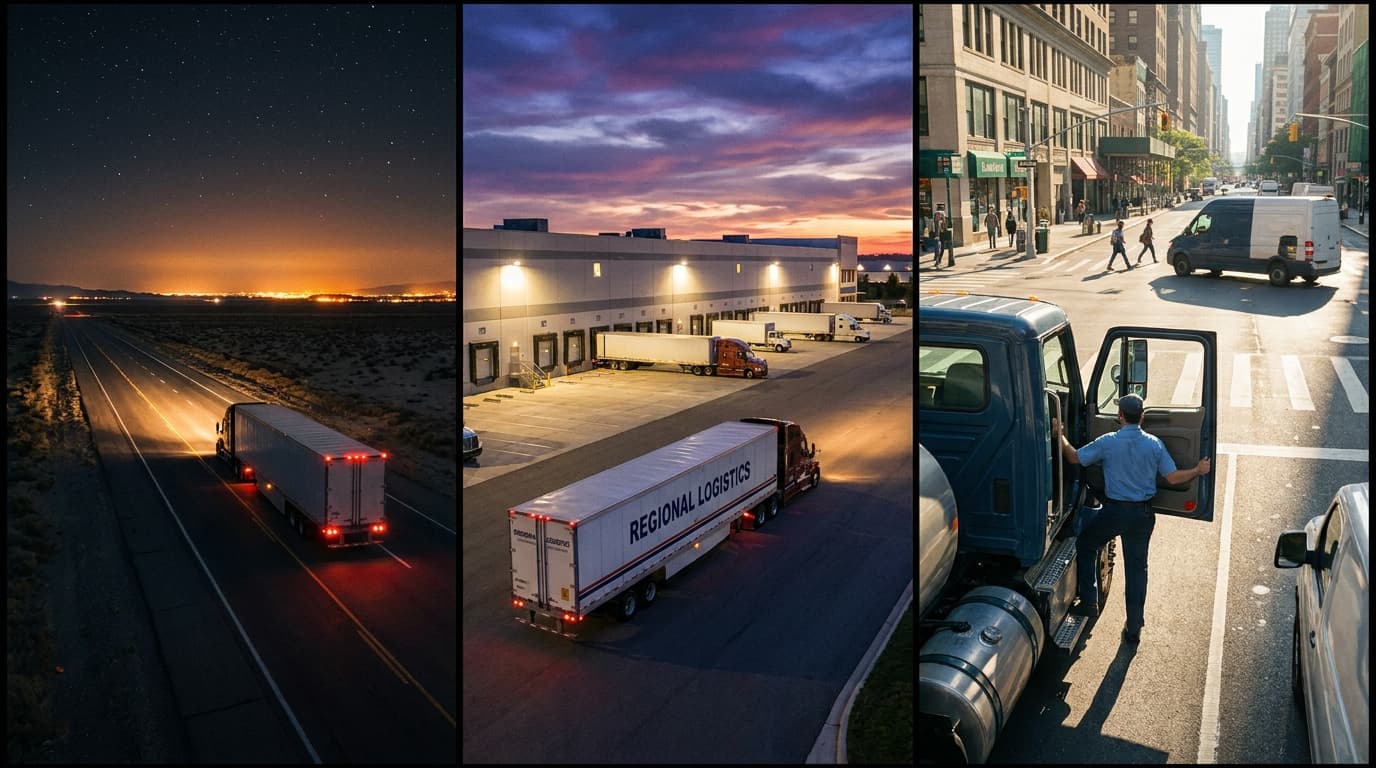
OTR typically pays the best CPM rates and comes with the most consistent mileage. You'll see the country, accumulate experience fast, and often earn a sign-on bonus from carriers who need consistent coverage on long hauls.
The real cost is measured in weeks away. OTR drivers are commonly out 3–4 weeks at a stretch, with 3–4 days home. If you have young children, an active relationship that requires presence, or health considerations that benefit from routine, OTR extracts a toll that doesn't show up in the CPM.
Who it works for:Single drivers building savings fast. Drivers early in their career accumulating experience. Empty nesters who enjoy long hauls and don't mind extended time on the road.
Before you commit to OTR
Ask for the actual home-time pattern — not 'regular home time.' How many days out, how many days home, and is it guaranteed in writing?
Regional: The Balance Point (With Caveats)
Regional driving typically covers a multi-state radius — home every week or every other weekend. It's the segment of the market experiencing the most growth right now because it threads the needle between pay and home time for the largest share of drivers.
The caveat: 'regional' is a loosely defined term. Some carriers mean home on weekends. Others mean home every 10 days. Always ask for a specific definition of home time in the regional context, not a recruiter's summary.
Who it works for:Drivers with families who need predictable weekly presence. Drivers transitioning out of OTR who want income stability with more home time. Mid-career drivers who've built experience and want a sustainable long-term pace.
Local: Home Every Night, Lower Ceiling
Local CDL jobs — P&D routes, dedicated accounts, intermodal drayage — typically mean home every day. The trade-off is a lower earnings ceiling, more physical demands (more touch freight, more loading/unloading), and often less driving variety.
Local positions are increasingly competitive and often go to drivers with strong safety records and tenure. They're the hardest category to land early in a CDL career and the most coveted later.
Who it works for: Drivers with family obligations that make overnight absence genuinely difficult. Drivers approaching retirement who want reduced travel stress. Drivers managing health conditions that benefit from home routine.
The right schedule isn't about what pays the most on paper. It's about what you can sustain without burning out — financially and personally.
Making the Decision That Fits Your Life Right Now
The right answer isn't permanent. Drivers move between OTR, regional, and local at different life stages — and the best carriers understand that. What matters is being honest with yourself about what the current chapter of your life actually requires, not what you think a 'real trucker' is supposed to prefer.
When you apply with Fleet Driver Network, our recruiters have a real conversation about where you are in life — not just your CDL class and MVR. We match you to carriers that fit your actual situation, not just the open seat. Apply freeand tell us what schedule you're actually looking for.
Leads Driver Success at Fleet Driver Network. Former OTR driver, current advocate for getting drivers paid fairly.